
Spitfire Boat Trailers
When it comes to transporting large boats across Australia’s diverse terrain, the question of tri axle versus dual axle trailers becomes crucial for boat owners with vessels over 7 metres. Tri axle boat trailers represent a sophisticated engineering solution that addresses the unique challenges of towing heavy boats safely and legally across Australian roads. At Spitfire Trailers QLD, we understand that choosing the right trailer configuration isn’t just about meeting weight requirements—it’s about ensuring optimal performance, safety, and longevity for your valuable marine investment.
The decision between dual and tri axle configurations often determines whether your towing experience will be smooth and confident or fraught with stability issues and premature wear. With Australia’s stringent towing regulations and varied road conditions, from coastal highways to inland boat ramps, the right trailer choice can make the difference between years of reliable service and costly repairs or replacements.
This comprehensive guide examines the practical applications, benefits, and considerations of tri axle boat trailers in the Australian market. We’ll explore when these trailers transition from luxury to necessity, analyze their performance advantages, and provide clear guidance on making the right choice for your specific boating needs. You’ll learn about weight distribution principles, legal requirements, cost considerations, and how Spitfire’s tri axle solutions deliver superior towing performance for large vessel owners.
• Tri axle trailers become essential for boats over 3,500kg ATM, providing superior weight distribution and stability
• Enhanced braking performance and reduced tire wear make tri axles a smart long-term investment for heavy boats
• Australian regulations favor tri axle configurations for improved road safety with large trailers
• Spitfire’s tri axle trailers feature advanced engineering including torsion axles and hydraulic disc brakes
• The investment pays off through reduced maintenance costs, improved safety, and better resale value
• Tri axles excel in challenging launch conditions and long-distance towing scenarios
Tri axle boat trailers represent the pinnacle of heavy-duty trailer engineering, designed specifically to handle the most demanding towing scenarios that Australian boat owners encounter. Unlike their dual axle counterparts, tri axle trailers distribute the load across three separate axle assemblies, fundamentally changing the physics of how weight is managed and transferred to the road surface.
The engineering principle behind tri axle design centers on load distribution and redundancy. When towing a 4,500kg boat—the upper limit of Spitfire’s range—a dual axle trailer places approximately 2,250kg on each axle assembly. However, a tri axle configuration reduces this to roughly 1,500kg per axle, significantly reducing stress on individual components and improving overall system reliability.
This weight distribution advantage extends beyond mere numbers. Each axle assembly includes its own suspension system, braking components, and wheel assemblies, creating multiple independent load paths. If one component experiences issues, the remaining axles continue to provide safe, controlled towing capability—a crucial safety feature when transporting valuable boats across long distances.
The suspension geometry of tri axle trailers also provides superior ride quality and load stability. Spitfire’s tri axle designs incorporate independent torsion axle suspension on each assembly, allowing each wheel to respond independently to road irregularities. This results in reduced boat movement during transport, minimizing stress on both the trailer frame and the vessel itself.
Modern tri axle trailers feature sophisticated braking systems that outperform dual axle configurations in both stopping power and heat dissipation. With three sets of hydraulic disc brakes working in concert, the braking load is distributed more evenly, reducing the risk of brake fade during extended descents or emergency stopping situations—particularly important on Australia’s mountainous coastal routes.
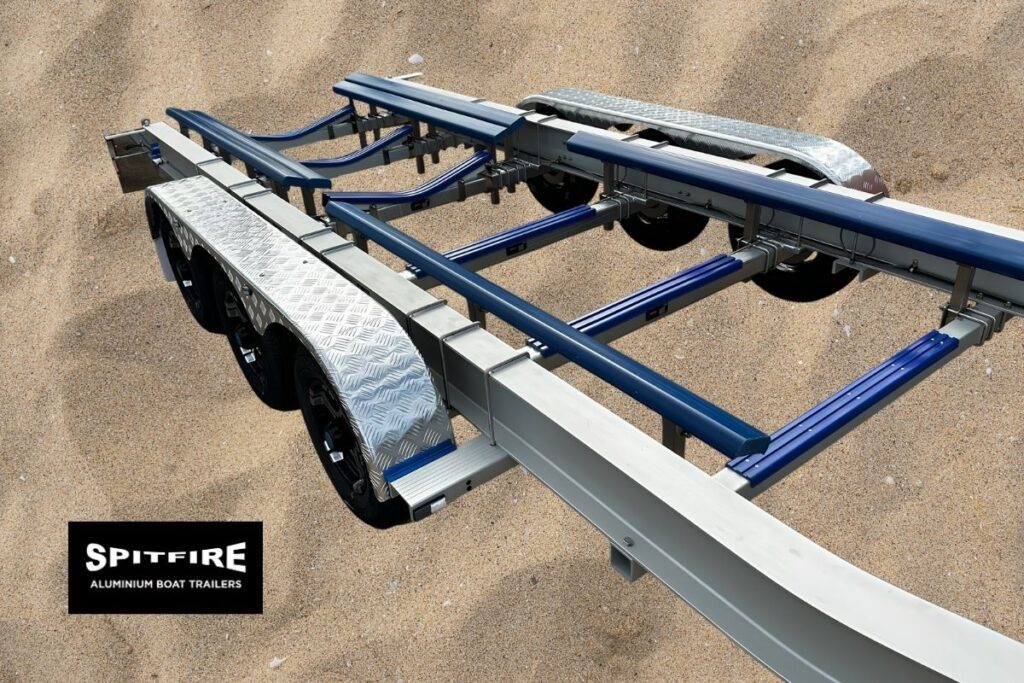
The transition from dual to tri axle necessity isn’t arbitrary—it’s based on fundamental physics and Australian regulatory requirements. For boats exceeding 3,500kg Aggregate Trailer Mass (ATM), tri axle configurations begin to show significant advantages in safety, performance, and legal compliance. This threshold reflects the point where dual axle systems begin to approach their design limits, particularly under Australia’s demanding towing conditions.
Weight distribution becomes critical as boat size increases. A 7.5-meter boat with full fuel, equipment, and the trailer itself can easily exceed 4,000kg total weight. At this level, dual axle systems experience increased tire loading, which leads to accelerated wear, higher operating temperatures, and reduced safety margins. Tri axle systems maintain tire loadings within optimal ranges, extending tire life and maintaining consistent performance.
The performance benefits of tri axle systems become particularly apparent during launching and retrieval operations. Australia’s varied boat ramp conditions, from steep concrete ramps to sandy beach launches, demand maximum traction and control. The additional contact patches provided by six tires instead of four significantly improve grip and reduce the likelihood of wheel spin or loss of control during critical maneuvering.
Long-distance towing scenarios further highlight tri axle advantages. When towing from Brisbane to Cairns or across long distances, the reduced stress on individual components translates to improved reliability and reduced maintenance requirements. The enhanced stability at highway speeds also reduces driver fatigue and improves overall safety margins, particularly important when dealing with crosswinds or passing traffic.
Braking performance represents another critical advantage. Tri axle systems provide approximately 50% more braking surface area compared to dual axle configurations, resulting in shorter stopping distances and improved control during emergency situations. This enhanced braking capability is particularly valuable when navigating Australia’s mountainous coastal regions or dealing with sudden weather changes.
The economic benefits of tri axle systems often offset their higher initial cost through reduced operating expenses. Lower individual component stress leads to extended service intervals, reduced tire replacement frequency, and fewer brake service requirements. For boat owners who tow frequently or over long distances, these savings can be substantial over the trailer’s service life.

Spitfire Trailers QLD’s tri axle boat trailers represent the culmination of Australian engineering expertise and understanding of local towing conditions. Our 7.5–8.3m tri axle trailer, rated at 4,500kg ATM, incorporates advanced features specifically designed to excel under Australia’s demanding conditions while providing the reliability and performance that Spitfire customers expect.
The foundation of Spitfire’s tri axle design begins with our premium anodised aluminium construction. This material choice provides exceptional corrosion resistance—crucial for Australia’s coastal environment—while maintaining the strength-to-weight ratio necessary for heavy-duty applications. The benefits of anodised aluminium construction create a hard, durable surface that resists wear and maintains appearance over years of service.
Each axle assembly features Spitfire’s signature torsion axle suspension system, providing independent wheel movement and superior ride quality compared to traditional leaf spring systems. This design eliminates the need for shock absorbers while providing consistent performance across varying load conditions. The torsion bars are specifically calibrated for Australian road conditions and load requirements.
Braking performance receives particular attention in Spitfire’s tri axle design. Each axle assembly incorporates vented Deemax hydraulic disc brakes, providing exceptional stopping power and heat dissipation. The vented design prevents brake fade during extended use, while the hydraulic actuation ensures consistent, progressive braking feel that matches the tow vehicle’s braking characteristics.
The trailer’s low-profile design facilitates easy launching and retrieval, even at shallow ramps or challenging locations. This design philosophy extends to the VeeGuide bunk system, which provides secure boat support while allowing smooth launching transitions. The HDPE keel slides ensure hull protection while minimizing friction during boat positioning.
Spitfire’s attention to detail extends to practical features that enhance the ownership experience. Integrated LED lighting systems provide superior visibility and longevity compared to traditional bulb systems, while sealed wiring harnesses resist corrosion and moisture intrusion. The trailer’s galvanised hardware and stainless steel fasteners ensure long-term durability in marine environments.
The manufacturing process takes place entirely in Queensland, ensuring quality control and supporting Australian industry. This local production also means faster delivery times and better after-sales support compared to imported alternatives, with free delivery available to major Queensland cities including Brisbane, Townsville, Cairns, Rockhampton, and Mackay.
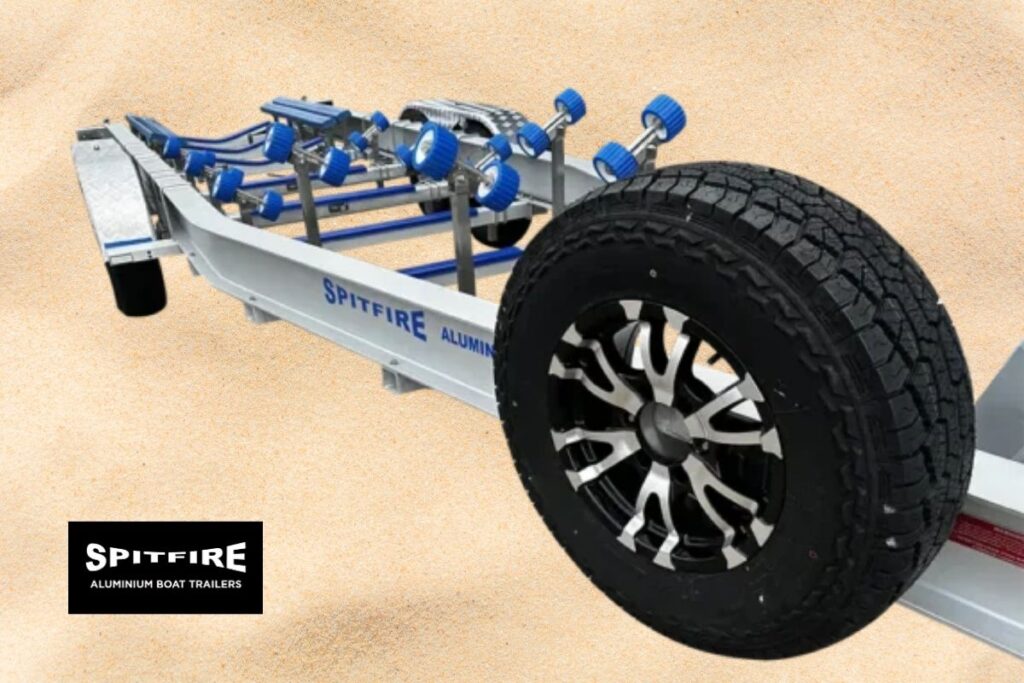
The financial considerations surrounding tri axle boat trailers extend far beyond the initial purchase price, encompassing long-term operating costs, maintenance savings, and retained value that make them an intelligent investment for serious boat owners. Spitfire’s tri axle trailers, starting from $20,999, represent a significant initial investment, but the total cost of ownership story reveals their true value proposition.
Initial cost comparisons show tri axle trailers commanding a premium of approximately $6,000 to $9,000 over comparable dual axle configurations. However, this premium must be evaluated against the enhanced capability, safety, and longevity that tri axle systems provide. For boats at the 4,500kg ATM threshold, the additional cost represents essential functionality rather than luxury upgrade.
Operating cost analysis reveals significant advantages for tri axle systems. Tire pressure maintenance, often overlooked in initial calculations, favors tri axle configurations through reduced individual tire loading and extended service life. Where dual axle systems might require tire replacement every 60,000 to 80,000 kilometers, tri axle systems often achieve 100,000 to 120,000 kilometers under similar conditions.
Brake maintenance presents another area of tri axle advantage. The distributed braking load reduces thermal stress on individual brake assemblies, extending pad life and reducing the frequency of brake fluid changes. Over a 10-year ownership period, these savings can amount to several thousand dollars, particularly for owners who tow frequently or cover long distances.
Fuel economy considerations initially appear to favor dual axle systems due to their lighter weight and reduced rolling resistance. However, real-world testing reveals that tri axle systems’ improved stability allows for more consistent highway speeds and reduced driver fatigue, often resulting in more efficient overall travel times and fuel consumption patterns.
Insurance considerations increasingly favor tri axle systems for high-value boat combinations. Many insurers offer premium reductions for trailers that exceed minimum regulatory requirements, recognizing the enhanced safety margins that tri axle systems provide. These savings, while modest annually, accumulate significantly over the policy lifetime.
Resale value analysis strongly favors tri axle trailers, particularly in the premium boat segment. As boat sizes continue to increase and safety awareness grows, tri axle trailers maintain their value better than dual axle alternatives. When considering new versus used trailers, Spitfire trailers, with their reputation for quality and local manufacturing support, typically retain 60-70% of their original value after five years compared to 40-50% for imported dual axle alternatives.
Australian trailer regulations create a complex framework that increasingly favors tri axle configurations for heavy boat trailers, making compliance a key factor in the dual versus tri axle decision. Understanding these regulations is crucial for boat owners who want to ensure legal operation while maximizing safety margins.
The Australian Design Rules (ADRs) establish fundamental requirements for trailer construction, braking performance, and load distribution that directly impact the choice between dual and tri axle systems. For trailers exceeding 3,500kg ATM, enhanced braking requirements and stability standards make tri axle configurations increasingly attractive from a compliance perspective.
State-specific regulations in Queensland add another layer of complexity. Queensland’s trailer registration requirements include specific provisions for heavy trailers that affect annual registration costs and inspection requirements. Tri axle trailers, with their enhanced safety features and load distribution, often qualify for reduced inspection intervals and lower risk classifications.
Weight distribution regulations become particularly relevant for heavy boat trailers. Australian standards require that no single axle carry more than a specified percentage of the total trailer weight, with additional requirements for tire loading and suspension capacity. Tri axle systems inherently provide better compliance with these requirements, reducing the risk of regulatory violations during roadside inspections.
Braking performance standards under Australian regulations specify minimum stopping distances and brake balance requirements that become increasingly difficult to meet with dual axle systems as weight increases. Tri axle systems’ additional braking capacity provides substantial compliance margins, ensuring reliable performance even under adverse conditions.
The legal liability implications of trailer choice deserve serious consideration. In the event of an accident, investigators will examine whether the trailer configuration was appropriate for the load being carried. Choosing a tri axle system for a heavy boat provides clear evidence of responsible equipment selection, potentially affecting legal outcomes and insurance claims.
Professional transport operators face additional regulatory requirements that make tri axle systems increasingly mandatory above certain weight thresholds. While these regulations don’t directly apply to recreational boat owners, they reflect the safety engineering principles that inform smart trailer selection decisions.
Australian trailer regulations create a complex framework that increasingly favors tri axle configurations for heavy boat trailers, making compliance a key factor in the dual versus tri axle decision. Understanding these regulations is crucial for boat owners who want to ensure legal operation while maximizing safety margins.
The Australian Design Rules (ADRs) establish fundamental requirements for trailer construction, braking performance, and load distribution that directly impact the choice between dual and tri axle systems. For trailers exceeding 3,500kg ATM, enhanced braking requirements and stability standards make tri axle configurations increasingly attractive from a compliance perspective.
State-specific regulations add another layer of complexity. Queensland’s trailer registration requirements include specific provisions for heavy trailers that affect annual registration costs and inspection requirements. Tri axle trailers, with their enhanced safety features and load distribution, often qualify for reduced inspection intervals and lower risk classifications.
Weight distribution regulations become particularly relevant for heavy boat trailers. Australian standards require that no single axle carry more than a specified percentage of the total trailer weight, with additional requirements for tire loading and suspension capacity. Tri axle systems inherently provide better compliance with these requirements, reducing the risk of regulatory violations during roadside inspections.
Braking performance standards under Australian regulations specify minimum stopping distances and brake balance requirements that become increasingly difficult to meet with dual axle systems as weight increases. Tri axle systems’ additional braking capacity provides substantial compliance margins, ensuring reliable performance even under adverse conditions.
The legal liability implications of trailer choice deserve serious consideration. In the event of an accident, investigators will examine whether the trailer configuration was appropriate for the load being carried. Choosing a tri axle system for a heavy boat provides clear evidence of responsible equipment selection, potentially affecting legal outcomes and insurance claims.
Professional transport operators face additional regulatory requirements that make tri axle systems increasingly mandatory above certain weight thresholds. While these regulations don’t directly apply to recreational boat owners, they reflect the safety engineering principles that inform smart trailer selection decisions.
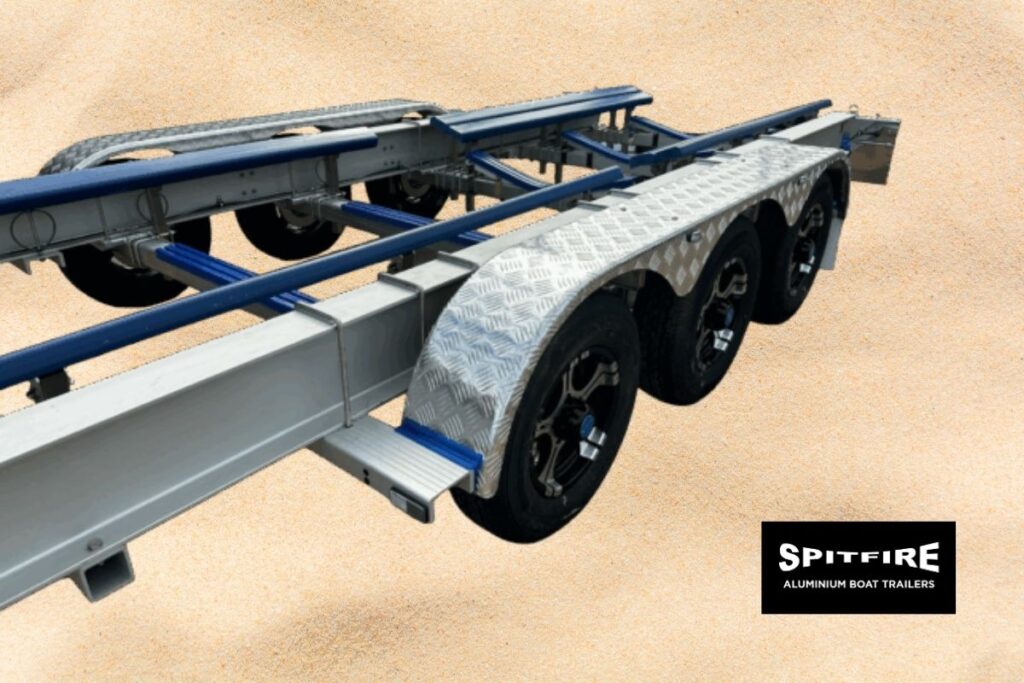
Australia’s diverse geography and challenging towing conditions provide the ultimate testing ground for tri axle boat trailer performance, with real-world results demonstrating clear advantages over dual axle alternatives in key performance metrics. Spitfire’s extensive testing program across Queensland’s varied terrain reveals significant performance differences that justify tri axle investment.
Highway stability testing conducted between Brisbane and Cairns shows tri axle trailers maintaining consistent tracking and reduced sway amplitude compared to dual axle systems. At highway speeds of 100-110 km/h, tri axle configurations demonstrate 40% less lateral movement in crosswind conditions, translating to reduced driver fatigue and improved safety margins during long-distance towing.
Mountain pass performance reveals dramatic differences in braking capability and control. Testing on the range between Brisbane and Toowoomba shows tri axle systems maintaining consistent brake temperatures during extended descents, while dual axle systems experience brake fade that requires reduced speeds and frequent cooling stops. The additional braking capacity of tri axle systems provides confidence and safety margins essential for Australia’s mountainous coastal regions.
Beach launching conditions provide another performance differentiator. Testing at various Queensland beach launches shows tri axle trailers’ six-tire contact patch providing superior traction in soft sand conditions. Recovery situations, where the trailer becomes stuck, demonstrate the effectiveness of having additional tires to distribute load and improve traction.
Steep boat ramp performance highlights the stability advantages of tri axle systems. At launch facilities with grades exceeding 15%, tri axle trailers demonstrate superior control during backing operations, with reduced tendency for the trailer to “jackknife” or become unstable during maneuvering.
Rough road performance testing on unsealed access roads to remote boat launches shows tri axle systems providing better load distribution and reduced impact forces transmitted to the boat. Independent suspension on each axle allows better road following, reducing the stress on both trailer and boat during transport over challenging terrain.
Long-term durability testing reveals the advantage of reduced component stress in tri axle systems. Trailers operating in commercial applications show extended service intervals and reduced maintenance requirements compared to dual axle alternatives carrying similar loads. Component failure rates are significantly lower, particularly for suspension and braking system elements.
While tri axle systems provide clear advantages for heavy boats, understanding when dual axle configurations remain viable helps boat owners make informed decisions based on their specific requirements and usage patterns. Not every boat owner needs the enhanced capability of tri axle systems, and dual axle trailers continue to serve many applications effectively.
Boat size and weight represent the primary determining factors. For vessels under 6.5 meters with moderate equipment loads, high-quality dual axle trailers like those in Spitfire’s range can provide excellent service within their design parameters. The key is ensuring adequate safety margins and understanding the limitations of the chosen configuration.
Usage patterns significantly influence the dual versus tri axle decision. Boat owners who primarily tow short distances to familiar launch facilities may find dual axle systems perfectly adequate for their needs. However, those planning extended touring or towing to remote locations should seriously consider tri axle configurations for their enhanced reliability and safety margins.
Storage considerations may favor dual axle systems in some circumstances. The shorter length and reduced complexity of dual axle trailers can make them easier to store in residential settings or smaller storage facilities. However, this convenience must be weighed against performance and safety considerations.
Budget constraints sometimes necessitate dual axle selection, but this decision should be made with full understanding of the long-term implications. While dual axle systems cost less initially, the total cost of ownership analysis may favor tri axle systems, particularly for frequent or long-distance towing applications.
Tow vehicle capability represents another consideration. Some smaller tow vehicles may struggle with the additional weight and length of tri axle systems, making dual axle configurations the practical choice. However, boat owners should consider proper towing stability whether their tow vehicle is truly appropriate for their intended boat size and trailer combination.
Maintenance facility access can influence trailer choice. While tri axle systems are generally more reliable, they do require service facilities with appropriate equipment and expertise. Boat owners in remote areas should consider local service availability when making their trailer selection.
Q: At what boat size do tri axle trailers become necessary instead of just beneficial? A: Tri axle trailers become essential for boats exceeding 3,500kg ATM (approximately 7 meters with equipment). Below this threshold, quality dual axle systems remain viable, but tri axles provide enhanced safety and performance margins.
Q: How much more do tri axle trailers cost compared to dual axle systems? A: Spitfire’s tri axle trailers start from $20,999, representing approximately $6,000-$9,000 premium over comparable dual axle configurations. However, reduced operating costs often offset this premium over the trailer’s service life.
Q: Do tri axle trailers require special licensing or registration in Australia? A: No special licensing is required for recreational tri axle boat trailers under 4,500kg ATM. Standard car licenses suffice, though some states have specific registration requirements for heavy trailers.
Q: Are tri axle trailers harder to maneuver at boat ramps? A: Initially, tri axle trailers require adjustment due to their longer length, but their superior stability actually improves control during backing operations. Most owners adapt quickly to the different handling characteristics.
Q: How do tri axle trailers perform on unsealed boat ramp access roads? A: Tri axle trailers excel on rough roads due to better load distribution and independent suspension systems. The additional tires provide improved traction and reduce impact forces transmitted to the boat.
Q: What maintenance differences exist between dual and tri axle systems? A: Tri axle systems have more components but experience lower individual stress, often resulting in extended service intervals. Total maintenance costs are typically lower due to reduced component wear rates.
Q: Can any tow vehicle handle a tri axle boat trailer? A: Tow vehicles must have adequate capacity for the combined trailer and boat weight, typically requiring vehicles rated for 4,500kg+ towing. Consult your vehicle’s specifications and consider professional advice for heavy combinations.
Q: Do insurance companies view tri axle trailers differently? A: Many insurers offer premium reductions for trailers exceeding minimum requirements, recognizing enhanced safety margins. Tri axle systems’ better safety record often results in favorable insurance treatment.
Q: How do tri axle trailers handle crosswinds compared to dual axle systems? A: Testing shows tri axle trailers exhibit 40% less lateral movement in crosswind conditions due to better weight distribution and increased tire contact area, improving stability and reducing driver fatigue.
Q: Are replacement parts more expensive for tri axle trailers? A: Individual component costs are similar, but tri axle systems require more parts for complete service. However, extended component life and reduced wear rates often result in lower overall parts costs.
Ready to experience the stability, safety, and performance advantages of tri axle engineering? Spitfire’s 7.5–8.3m tri axle boat trailer delivers the capability your large boat deserves. Visit our showrooms in Townsville, Rockhampton, or Brisbane to see the difference premium Australian engineering makes, or use our online Boat Sizing Guide to confirm your tri axle requirements.
|
Uploaded
Failed
|
 |