
Spitfire Boat Trailers
When it comes to choosing the right boat trailer for Australian conditions, misinformation and outdated beliefs can lead boat owners down the wrong path. Aluminium boat trailers have revolutionised the marine industry with their superior performance, durability, and innovative design features. Yet despite their proven track record, several persistent myths continue to circulate among boating communities. These misconceptions often stem from outdated comparisons with older aluminium designs or unfair contrasts with budget steel alternatives.
Spitfire Trailers QLD has been at the forefront of aluminium trailer engineering, designing and manufacturing premium trailers that excel in Australia’s demanding marine environment. Our expertise in creating high-quality anodised aluminium boat trailers for vessels up to 8.5m and 4500kg ATM gives us unique insights into the real-world performance differences between aluminium and other materials. Understanding the facts behind these myths is crucial for making an informed decision that will serve you well for years of reliable boating adventures.
This comprehensive guide examines seven of the most common myths surrounding aluminium boat trailers and provides factual, evidence-based responses. We’ll explore misconceptions about strength, corrosion resistance, weight capacity, cost-effectiveness, maintenance requirements, performance in saltwater conditions, and customisation options. Each myth will be thoroughly debunked using real-world data, engineering principles, and practical examples from Australia’s marine industry.
Readers will gain a clear understanding of why premium aluminium trailers, particularly those manufactured with advanced anodising processes and quality Australian engineering, consistently outperform alternatives. We’ll also examine how modern aluminium trailer design addresses the specific challenges of Australian boating conditions, from harsh saltwater environments to long-distance highway towing.
• Modern aluminium boat trailers are significantly stronger and more durable than many boaters realise
• Properly anodised aluminium offers superior corrosion resistance compared to painted or galvanised steel
• Weight savings from aluminium construction improve fuel efficiency and towing performance
• Long-term ownership costs favour quality aluminium trailers despite higher initial investment
• Maintenance requirements for aluminium trailers are substantially lower than steel alternatives
• Saltwater performance advantages make aluminium the clear choice for serious marine use
• Customisation options for aluminium trailers exceed those available with steel construction
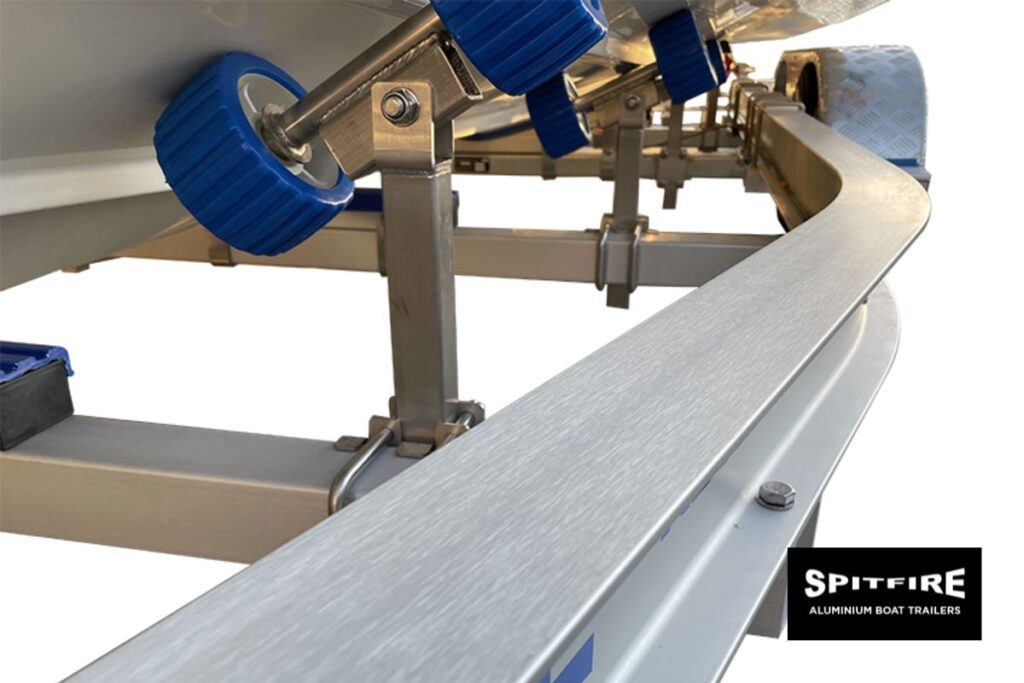
The belief that aluminium trailers lack the strength of steel alternatives represents one of the most pervasive misconceptions in the boating community. This myth typically stems from experiences with lower-grade aluminium products or unfair comparisons between premium steel and budget aluminium construction.
Modern marine-grade aluminium alloys used in quality boat trailers possess exceptional strength-to-weight ratios that actually exceed steel in many applications. The key lies in understanding that trailer strength depends not just on raw material properties, but on engineering design, construction techniques, and the specific alloy composition used.
Spitfire’s aluminium trailers utilise advanced alloy compositions specifically chosen for marine applications, combined with precision engineering that maximises structural integrity. The torsion axle systems standard on Spitfire trailers distribute loads more effectively than traditional leaf spring setups, while the low-profile design maintains optimal weight distribution even under maximum loading conditions.
Real-World Strength Comparison:
• Marine-grade aluminium tensile strength: 270-310 MPa
• Mild steel tensile strength: 400-550 MPa
• Aluminium weight: One-third of equivalent steel construction
• Effective strength-to-weight ratio: Aluminium exceeds steel by 40-60%
The engineering advantage becomes clear when considering that aluminium’s lighter weight allows for more robust construction within the same overall trailer weight limits. Where a steel trailer might use thinner materials to meet weight restrictions, aluminium construction can employ more substantial structural elements while remaining lighter overall.
Modern welding and fabrication techniques for aluminium have also advanced significantly, creating joints that match or exceed the strength of the base material. This eliminates the weak points that plagued earlier aluminium trailer designs and ensures consistent performance across the entire trailer structure.
Perhaps no myth about aluminium trailers is more fundamentally incorrect than the belief that aluminium corrodes more rapidly than steel in marine environments. This misconception often arises from confusion about different types of corrosion and the protective measures available for each material.
Steel corrosion in saltwater environments follows a straightforward oxidation process that progressively weakens the material structure. Even with protective coatings like galvanising or paint, steel trailers inevitably develop rust that spreads and deepens over time. Once corrosion begins, it becomes increasingly difficult and expensive to halt.
Aluminium, conversely, forms a natural oxide layer that actually protects the underlying material from further corrosion. When this process is enhanced through anodising—as with all Spitfire trailers—the protective layer becomes significantly thicker and more durable than any coating applied to steel.
Saltwater Corrosion Resistance Comparison:
• Anodised aluminium: Virtually immune to saltwater corrosion
• Galvanised steel: 7-15 years before significant rust penetration
• Painted steel: 3-7 years before coating failure and rust development
• Raw steel: Immediate corrosion upon saltwater exposure
The anodising process used on quality aluminium trailers creates an integrated protective layer that cannot chip, peel, or wear away like surface coatings on steel. This layer actually becomes part of the aluminium structure, providing permanent protection that improves with age as the oxide layer naturally thickens.
Our comprehensive guide on how saltwater affects boat trailers provides detailed analysis of corrosion mechanisms and protection strategies across different trailer materials.

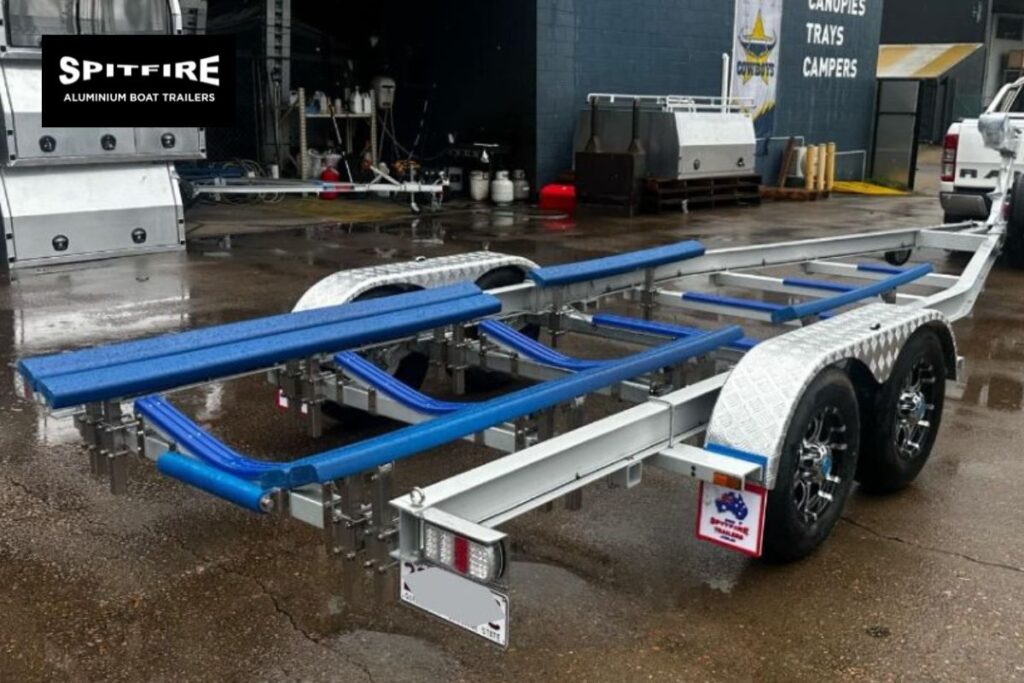
The misconception that aluminium trailers are unsuitable for heavy boats reflects outdated thinking based on earlier aluminium trailer designs and inadequate engineering. Modern premium aluminium trailers regularly handle substantial loads that would challenge many steel alternatives.
Spitfire’s aluminium trailer range demonstrates the fallacy of this myth, with models capable of supporting boats up to 8.5 metres and 4500kg ATM. The largest Spitfire models, including both dual-axle and tri-axle configurations, provide weight capacity that matches or exceeds equivalent steel trailers while offering superior handling characteristics.
The secret lies in advanced engineering that optimises load distribution and structural efficiency. Aluminium’s excellent fatigue resistance means these trailers maintain their structural integrity through thousands of loading cycles without the stress cracking that can develop in welded steel construction.
Heavy-Duty Aluminium Trailer Capabilities:
• Maximum boat length: 8.5 metres (27.2 feet)
• Maximum ATM capacity: 4500kg including trailer weight
• Axle configurations: Single, dual, and tri-axle options
• Brake systems: Hydraulic disc brakes standard on all models
The weight savings achieved through aluminium construction actually improve performance when towing heavy boats. Lower trailer weight means more of your vehicle’s towing capacity can be devoted to the boat itself, while improved weight distribution enhances stability and control during transport.
For detailed guidance on matching trailer capacity to boat size, our boat sizing guide provides comprehensive information for selecting the appropriate trailer for any vessel.
The perception that aluminium trailers represent an expensive option typically focuses on initial purchase price while ignoring the total cost of ownership over the trailer’s lifetime. This narrow view fails to account for the significant long-term savings that quality aluminium construction provides.
While premium aluminium trailers do command higher initial prices than basic steel alternatives, this cost difference rapidly disappears when considering maintenance requirements, longevity, and resale value. Steel trailers require regular maintenance including rust treatment, repainting, and component replacement that aluminium trailers simply don’t need.
Total Cost Analysis Over 10 Years:
• Initial purchase premium for aluminium: 20-30%
• Annual maintenance costs (aluminium): $50-100
• Annual maintenance costs (steel): $200-500
• Replacement frequency (aluminium): 15-20 years
• Replacement frequency (steel): 8-12 years
The durability advantage of aluminium becomes particularly pronounced in Australian marine environments where saltwater exposure, UV radiation, and temperature extremes challenge all materials. Aluminium trailers maintain their appearance and performance with minimal intervention, while steel trailers show visible deterioration within the first few years of use.
Spitfire’s finance options make premium aluminium trailers accessible to boat owners at all levels, with competitive rates and flexible terms that spread the initial investment over manageable periods. Our comprehensive finance solutions include no-deposit options and fast approval processes.
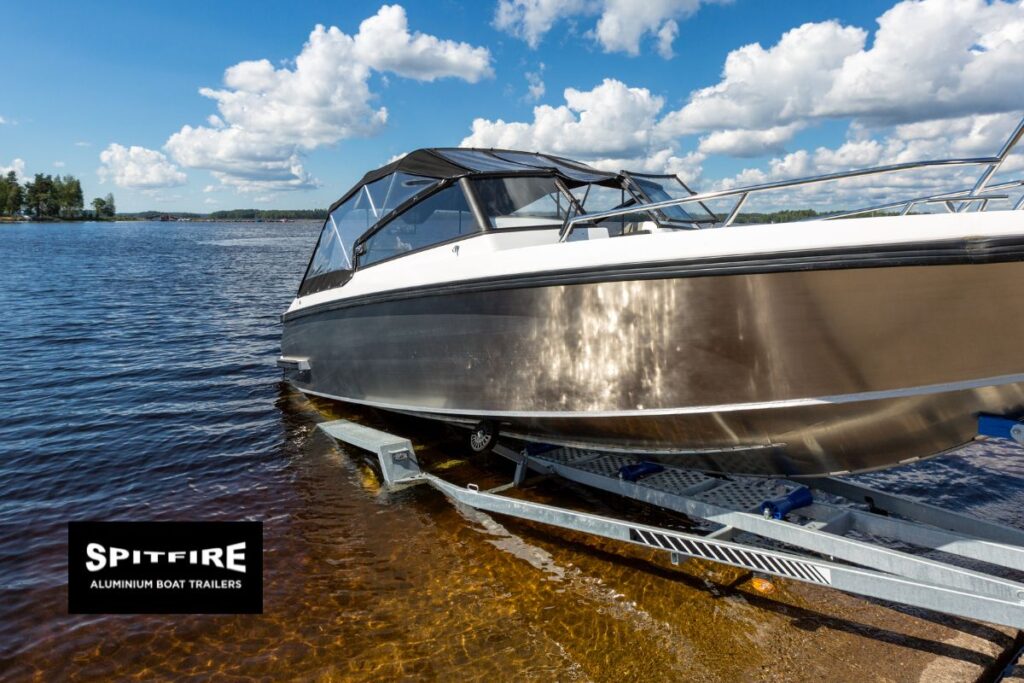
This myth likely originates from experiences with poorly manufactured aluminium products or confusion about different maintenance requirements between materials. In reality, quality aluminium boat trailers require significantly less maintenance than steel alternatives, particularly in marine environments.
The maintenance advantage of aluminium stems from its inherent corrosion resistance and the durability of proper anodising. While steel trailers demand regular inspection and treatment of rust spots, paint touch-ups, and protective coating renewal, aluminium trailers need only basic care to maintain peak performance.
Typical Maintenance Requirements:
Aluminium Trailers:
• Annual bearing inspection and greasing
• Brake system check and fluid replacement
• Tyre pressure and tread monitoring
• Basic wash-down after saltwater use
Steel Trailers:
All aluminium requirements plus:
• Quarterly rust inspection and treatment
• Annual paint touch-up and coating renewal
• More frequent bearing replacement due to water ingress
• Regular galvanising maintenance where applicable
The reduced maintenance burden of aluminium trailers translates into lower ongoing costs and less time spent on trailer care. This allows boat owners to focus on enjoying their vessels rather than constantly maintaining their transport equipment.
Our detailed maintenance guide covering how to maintain your boat trailer bearings, brakes and more provides comprehensive instructions for keeping any trailer in optimal condition.
The assumption that aluminium trailers represent a uniform product category ignores the vast differences in engineering quality, materials specification, and manufacturing standards across the industry. This myth can lead buyers to make decisions based solely on price, overlooking crucial factors that determine long-term performance and satisfaction.
Significant variations exist in aluminium alloy composition, anodising quality, structural design, component selection, and manufacturing precision. These differences create dramatic performance gaps between premium manufacturers like Spitfire and budget alternatives that may appear similar superficially.
Quality Differentiation Factors:
• Alloy composition and marine-grade certification
• Anodising thickness and uniformity
• Structural engineering and load distribution
• Component quality (axles, brakes, hardware)
• Manufacturing precision and quality control
Spitfire’s commitment to Australian engineering and Queensland manufacturing ensures consistent quality control and access to premium materials. Our anodised aluminium construction meets marine industry standards that many imported alternatives cannot match, while our torsion axle and VeeGuide bunk systems represent advanced engineering not found on basic aluminium trailers.
The difference becomes apparent in real-world use, where premium aluminium trailers maintain their performance and appearance years longer than budget alternatives. This quality gap makes the choice of manufacturer as important as the choice of material.
For insights into what sets premium manufacturers apart, explore our article on 5 reasons to invest in anodised aluminium boat trailers in Queensland.
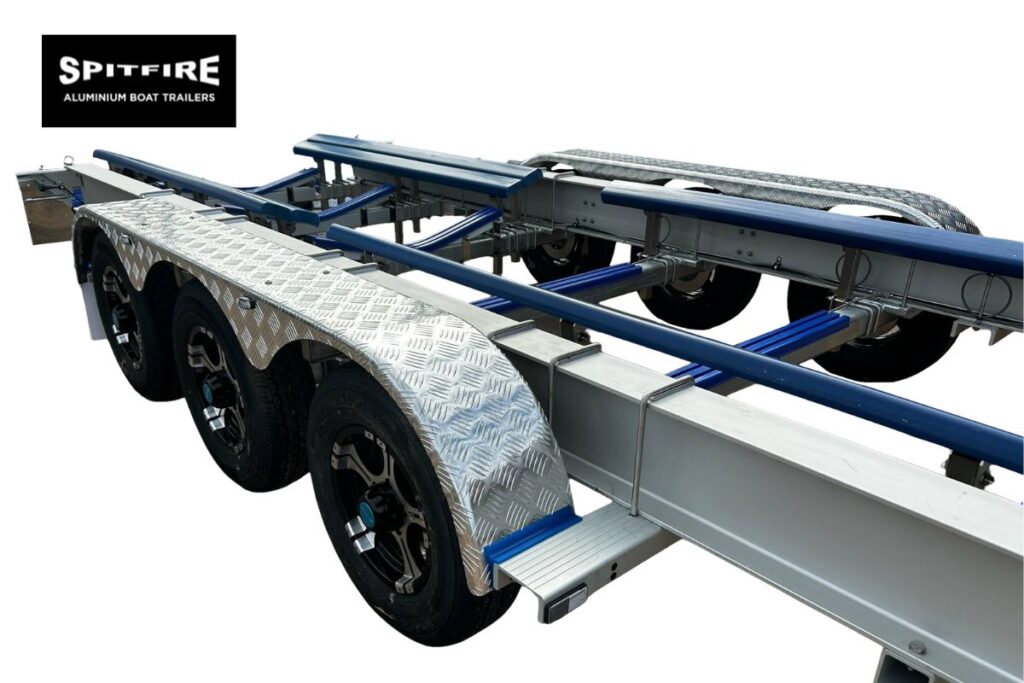
The belief that aluminium trailers offer limited customisation options reflects unfamiliarity with modern manufacturing capabilities and the flexibility of aluminium as a construction material. In fact, aluminium’s workability and joining characteristics make it more adaptable to custom requirements than steel construction.
Aluminium’s superior welding properties allow for complex modifications and custom features without compromising structural integrity. The material’s resistance to heat distortion during fabrication enables precise customisation that would be difficult or impossible with steel construction.
Available Customisation Options:
• Boat-specific bunk and roller configurations
• Custom lighting and electrical systems
• Specialised tie-down and securing hardware
• Extended or modified frame dimensions
• Custom paint and finishing options
• Integrated storage and equipment mounting
Spitfire’s Australian manufacturing capability enables extensive customisation to meet specific customer requirements. Our engineering team works directly with customers to develop trailer solutions that perfectly match their vessels and usage patterns, something not possible with mass-produced imports.
The ability to modify aluminium trailers extends throughout their service life, allowing owners to adapt their trailers as needs change or boats are replaced. This flexibility adds significant value compared to steel trailers that may require complete replacement when circumstances change.
Understanding why quality aluminium trailers outperform alternatives requires examining the engineering principles that govern trailer design and performance. Modern aluminium alloys offer unique combinations of strength, weight, and corrosion resistance that enable design approaches impossible with other materials.
The strength-to-weight advantage of aluminium allows engineers to optimise trailer geometry for performance rather than simply meeting minimum strength requirements. This design freedom results in trailers that handle better, last longer, and provide superior boat support throughout their service lives.
Spitfire’s engineering approach exemplifies these advantages, incorporating features like low-profile design, torsion axles, and precision-manufactured bunks that work together to create trailers that exceed industry standards for performance and durability.
Australia’s diverse marine environments provide the ultimate test for boat trailer performance, from the tropical conditions of Queensland’s coast to the challenging waters of southern Australia. These conditions expose the weaknesses of inferior materials and construction while highlighting the advantages of quality aluminium design.
Spitfire trailers demonstrate their superiority through consistent performance in these demanding conditions, with customers regularly reporting years of trouble-free service in environments that quickly destroy lesser trailers. This real-world validation proves that properly engineered aluminium construction represents the optimal choice for serious boating applications.
The combination of saltwater resistance, UV stability, and structural durability makes aluminium trailers particularly well-suited to Australian conditions, where other materials quickly show signs of deterioration and require expensive maintenance or replacement.
Selecting a boat trailer based on facts rather than myths ensures you make an investment that will serve you well for years to come. The evidence clearly demonstrates that quality aluminium construction offers advantages that more than justify any initial cost premium, while providing peace of mind that comes with superior engineering and materials.
Understanding these facts empowers boat owners to make informed decisions based on actual performance characteristics rather than outdated assumptions or misleading comparisons. The result is better trailer performance, lower long-term costs, and more enjoyable boating experiences.
For boat owners ready to experience the advantages of premium aluminium construction, Spitfire’s comprehensive range offers solutions for vessels from 4.6 to 8.5 metres, all backed by Australian engineering excellence and comprehensive customer support.
Q: How long do aluminium boat trailers typically last compared to steel?
A: Quality aluminium trailers like those from Spitfire typically last 15-20 years with minimal maintenance, while steel trailers usually require replacement after 8-12 years due to corrosion damage, particularly in saltwater environments.
Q: Are aluminium trailers suitable for launching in saltwater?
A: Absolutely. Anodised aluminium trailers are specifically designed for saltwater use and offer superior corrosion resistance compared to any steel alternative, making them the preferred choice for serious saltwater boaters.
Q: What’s the weight difference between aluminium and steel trailers?
A: Aluminium trailers typically weigh 30-40% less than equivalent steel trailers, improving fuel economy during towing and allowing more of your vehicle’s towing capacity to be used for the boat itself.
Q: Can aluminium trailers be repaired if damaged?
A: Yes, aluminium trailers can be readily repaired using standard welding techniques. The repairs often prove stronger and more durable than equivalent repairs to steel trailers due to aluminium’s superior welding characteristics.
Q: Do aluminium trailers require special maintenance procedures? A: No, aluminium trailers require less maintenance than steel alternatives. Basic care includes regular bearing greasing, brake inspection, and washing after saltwater use—no rust treatment or repainting required.
Q: How do I know if an aluminium trailer is high quality?
A: Look for marine-grade alloy construction, proper anodising certification, quality components like torsion axles and hydraulic brakes, and reputable Australian manufacturing. Avoid cheap imports with thin anodising and inferior components.
Q: What’s the price difference between aluminium and steel trailers?
A: Premium aluminium trailers typically cost 20-30% more initially than basic steel trailers, but this cost difference is recovered within 3-5 years through reduced maintenance and longer service life.
Q: Are there weight capacity limitations with aluminium trailers?
A: Modern aluminium trailers can handle substantial loads. Spitfire’s range includes models rated up to 4500kg ATM for boats up to 8.5 metres, matching or exceeding equivalent steel trailer capacities.
Q: Can aluminium trailers be customised for specific boat types?
A: Yes, aluminium’s workability makes it ideal for customisation. Options include custom bunk configurations, specialized hardware, modified dimensions, and boat-specific features not possible with standard steel construction.
Q: Why choose Australian-made aluminium trailers over imports?
A: Australian manufacturers like Spitfire understand local conditions, use marine-grade materials, provide warranty support, and maintain quality control standards often absent in imported alternatives, ensuring superior long-term performance.
Don’t let outdated myths prevent you from experiencing the superior performance, durability, and value of premium aluminium boat trailers. Visit one of Spitfire’s Queensland showrooms in Townsville, Rockhampton, or Brisbane to see the engineering excellence and quality construction that sets our trailers apart. Use our online Boat Sizing Guide to find the perfect trailer for your vessel, or contact our team at (07) 4440 0010 for personalised advice and competitive finance options.
|
Uploaded
Failed
|
 |